
For the 14th time, Aurore brings the radiant light of Renaissance music to the heart of the Nordic winter! We are thrilled to welcome our audience to join us in Helsinki from January 28th to 31st 2027.
Aurore 2027
- From Vienna to Königsberg – Guest concert Titans Rising (Germany) Thursday 28th January 7 PM
- Toccate e canzoni – The Allure of Italian Organ Music Friday 29th January 7 PM
- The Splendour of Kraków – Guest concert La Morra (Switzerland) Saturday 30th January 7 PM
- The Muse of Muses – Petrarch ♥︎ Laura Sunday 31st January 6 PM
Meet The Artists event 45min before each concert at the St. Paul’s parish hall. We invite the audience to meet the artists, listen to them chat about the evening’s repertoire, and enjoy a warming cup of coffee or tea.
Please note the Sunday concert starts at 6 PM, one hour earlier than the other Aurore concerts.
About Aurore
Founded in 2014, Aurore is the only music festival in Finland specifically focused on Renaissance music. We strive to bring forward the wonderful and vivid, yet rarely heard repertoire from ca. 1450–1600, brought to life by the leading renaissance specialists in music. The highly skilled artists performing in Aurore are specialised in early music and the historical performance practises and instruments of the renaissance era. The festival aims to give the audience a comprehensive view to the captivating world of the renaissance. Before each concert we invite the audience to meet the artists, listen to them chat about the evening’s repertoire, and enjoy a warming cup of coffee or tea. With our engaging concerts, highly skilled artists, the laid back Meet&Greet events and our exceptionally detailed program notes we have attracted many listeners and built a strong, renaissance-happy core audience.
Aurore takes place at the architecturally and acoustically magnificent St. Paul’s church. In addition to the acoustics that beautifully complement Renaissance music, St. Paul’s also hosts a Renaissance style organ, tuned in to a meantone temperament.
Aurores artistic planning is led by an artistic committee, which includes singers Mats Lillhannus and David Hackston, singer and choir conductor George Parris, early music flutist Sini Vahervuo, lutenist Mikko Ikäheimo and harpsichordist and conductor Matias Häkkinen, varying slightly depending on the year.
“Renaissance music is beautiful, empowering and meditative. The feeling of shared humanity in the music flows through us when listening to it, and makes us forget how old the music truly is. Renaissance music still has a voice today, and it continues to touch the people of the 21st century equally as much as the audiences of its own time.”
–Kari Turunen, founding member and the first artistic director of Aurore: current Artistic Director of The Vancouver Chamber Choir
Follow us on Facebook and Instagram.
CONCERTS
- All concerts in St. Paul’s church (Sammatintie 5, Helsinki).
- Concert durations ca. 70 minutes, no intermissions.
- Meet&Greet with the artists and free coffee 45 min before each concert at St. Paul’s parish hall (entrance via church main doors)
- Doors open to the audience one hour before concerts.
From Vienna to Königsberg – Guest concerts Titans Rising (Germany)
• Thu 28th Jan at 7 pm •
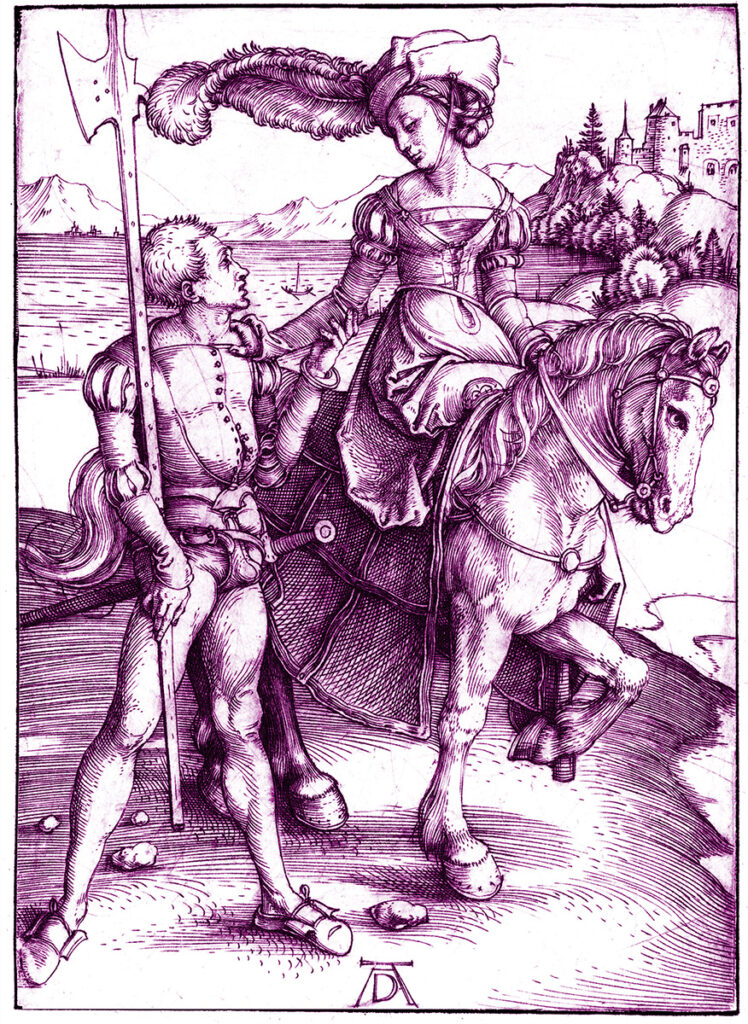
From the imperial splendor of Vienna to the musical worlds of Poland and the Baltic, we follow a bold traveler making his way across 16th-century Europe. Every departure brings uncertainty: roads are dangerous, borders unpredictable, and death an ever-present possibility. Yet he presses onward, gathering songs, dances, and musical treasures from the courts and cities he encounters along the way. German Tenorlieder, Franco-Flemish polyphony, and lively Polish dances reveal a vibrant musical landscape in which melodies and ideas cross political and cultural borders. Woven throughout the program, the many musical faces of Fortuna reflect the traveler’s precarious fate – and the forces that shape his journey.
His route leads from the courts of the Holy Roman Emperors, with music by Heinrich Isaac (1450–1517) and Ludwig Senfl (1486–1542/43), through Munich and the world of Orlando di Lasso (1532–1594), and onward to the flourishing cities of Augsburg and Nürnberg. He passes through Protestant Wittenberg and Leipzig, gathering tunes from the publications of Georg Rhau (1488–1548), before dancing into Silesia with works by Valentin Haussmann (1560 –ca 1613). Further east, he encounters the musical traditions of the Polish-Lithuanian lands, collecting works by Heinrich Finck and his follower Thomas Stoltzer (1480–1526), alongside melodies by influential masters from across Europe preserved in the remarkable manuscript (ca 1540) of Jan z Lublina. At last, he reaches Königsberg, the court of Albrecht, Duke of Prussia, and the musical world of the newly established duchy.
The pieces he has gathered along the way not only mark his personal journey, but also form a musical map of a Europe in motion — a world where music travels across borders and confessions, carrying the sounds of one court and city into the next.
Artists
- Titans Rising (Germany)
Composers
- Thomas Stoltzer
- Heinrich Isaac
- Ludwig Senfl
- Orlando di Lasso
- Valentin Haussmann
- Heinrich Finck
6.15 pm – Meet the artist and free coffee at St. Pauls parish hall
7.00 pm – Concert begins at St. Pauls church
Toccate e canzoni – The Allure of Italian Organ Music
• Fri 29th Jan at 7 pm •
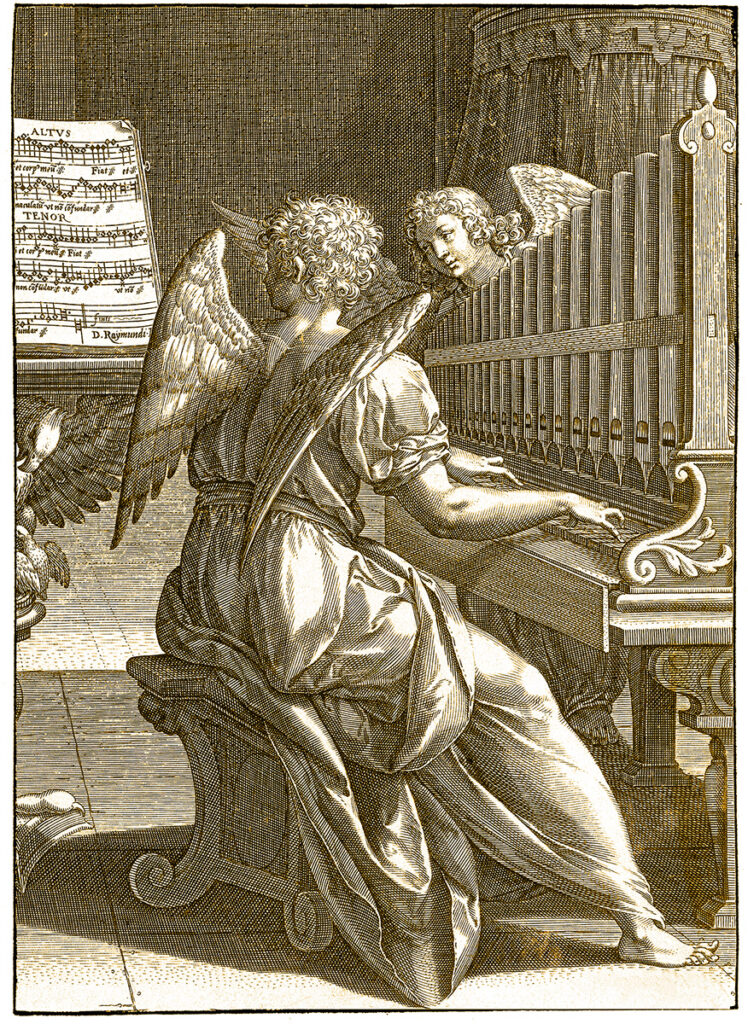
Ilpo Laspas’s solo recital celebrates the historic organ of St. Paul’s Church and the vibrant virtuosity of Italian keyboard music. Built by Martti Porthan organ workshop, the St. Paul’s organ reflects the Italian organ tradition and is tuned in meantone temperament. This tuning highlights both the purity of major chords as well as the tensions of chromatic harmonies. Compared with the equal temperament familiar to modern ears – in which all chords sound, as the name suggests, equally well (or “equally ill”) – the rich harmonies of meantone temperament are far more colourful, offering a variety of nuanced flavours and bold contrasts.
The concert presents a cross-section of Italian organ and keyboard music from the sixteenth century to the early decades of the seventeenth. Laspas’ program includes a versatile selection of toccatas, ricercars and canzonas by Girolamo Frescobaldi (1583–1643), Andrea Antico (c. 1480 – after 1538) and other composers of the period, alongside intabulations: keyboard arrangements of other popular music of the era.
Artists
- Ilpo Laspas, organ
Composers
- Andrea Antico
- Girolamo Frescobaldi
- Ascanio Mayone
- Giovanni Maria Cavazzoni
- Girolamo Cavazzoni
6.15 pm – Meet the artist and free coffee at St. Pauls parish hall
7.00 pm – Concert begins at St. Pauls church
The Splendour of Kraków – Guest concert La Morra (Switzerland)
• Sat 30th Jan at 7 pm •
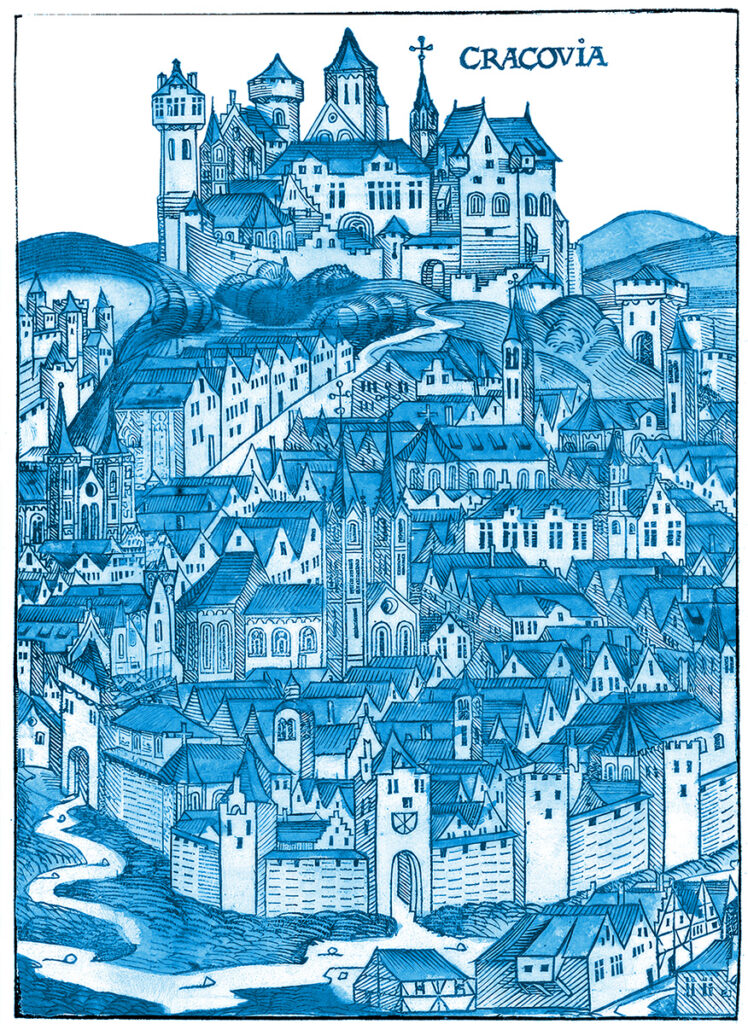
In the first decades of the 15th century, Cracow (in Polish: Kraków), ‘that city, above all given to theology, virtually abandoning all the other liberal arts, placed a particularly high value on music, thanks principally to which it could achieve the greatest possible solemnity for divine services.’ The author of this report, an expatriate Florentine humanist Filippo Buonaccorsi (1437–1496), even states that the city was ‘gripped by the greatest enthusiasm [for that art]’.
Evidence of this survives chiefly in two musical sources: the manuscript III.8054 of the National Library of Poland (a collection of theological writings and music copied by a priest named Petrus de Kazimiria); and the anonymous music manuscript F.I.378, deliberately burned by German troups in October 1944 — along with the huge collection of Polish historical documentation that once resided in the Krasiński Estate Library in Warsaw (fortunately, photographs survived). Both manuscripts date from around 1440 and predominantly contain sacred liturgical music, though they are chiefly known for their secular works celebrating the city of Cracow and the royal family that resided therein.
A central figure in these sources is the composer Mikołaj Radomski (?–ca 1425). Despite scholarly efforts, his identity remains unclear: is he identical with a priest mentioned in a few papal documents in 1390, or rather with a clavicymbalista domine regine Poloniae (‘clavicimbalum player to the Lady Queen of Poland’) documented in Cracow in 1422, or perhaps with yet another person? A composition celebrating the birth of Prince Kazimir (1426) suggests that he was no stranger at the royal court. It seems likely that Radomski’s sacred music originated in connection with the cathedral on Wawel Hill (or with another prominent church in the city). Lastly, both manuscripts may be evidence of his activity as a music teacher (perhaps at the cathedral school).
In Cracow, Radomski may have encountered Petrus Wilhelmi de Grudencz (1392– after 1452), who studied at the university in the 1420s. Brought back from oblivion in 1975 by the Czech musicologist Jaromír Černý (1939–2012). Wilhelmi is now widely regarded as Central Europe’s most prolific and idiomatic composer of his time.
Both manuscripts testify to an intensive study of Italian and French art music. Many of Radomski’s own works are stylistically informed by Antonio Zacara da Teramo’s (1350/60–1413/16) and Johannes Ciconia’s (1370–1412) liturgical music, and he was also familiar with more modern compositional techniques such as fauxbourdon. Local musicians like Radomski were furthermore acquainted with French chansons (in which they replaced the original texts with new, devotional texts in Latin), as well as with Italian laude.
Occasional comments left by the copyist of the manuscript F.I.378 (for instance krasne barszo, ‘most beautiful’) reveal his admiration for this music, which he clearly sang himself (as performance-related remarks furthermore testify). The use of the word opus documented in the manuscript III.8054 is among the earliest recorded occurrences of this term in reference to a musical work!
The insight into Cracow’s musical life afforded by the manuscripts III.8054 and F.I.378 is here expanded by the types of music that may have been more familiar to many people in Poland (and in Central Europe in general) than the works of Zacara and Ciconia. Besides plainchant, this included less complex polyphonic sacred and secular music.When the art of printing and publishing music took great strides forward at the beginning of the 16th century, the first books were anthologies containing individual works by many different composers collected within the same covers. Alongside these, it quickly also became common to issue editions devoted to a single composer, yet anthologies maintained their popularity throughout the century. In the zeal for marketing, the collections were given the most imaginative titles, such as Motets from the Labyrinth (Motetti del Laberinto) or Joyful Harmonies (Symphoniae Iucundae). These collections provide a fascinating insight into which composers and which of their works were considered valuable and popular enough to be widely printed. Sometimes we encounter surprising names, while composers who today would be regarded as essential are completely absent.
Artists
La Morra:
- Doron Schleifer – voice
- Ivo Haun De Oliveira – voice
- Matthieu Romanens – voice
- Corina Marti – clavicimbalum & recorders
- Michał Gondko – plectrum lute
- Vojtěch Jakl – fiddle
- Artistic directors: Corina Marti & Michał Gondko
Composers
- Mikołaj Radomski
- Vincentius de Kielcza
- Othmarus Opilionis de Jawor
- Petrus Wilhelmi de Grudencz
- Jacobus de Clibano
6.15 pm – Meet the artist and free coffee at St. Pauls parish hall
7.00 pm – Concert begins at St. Pauls church
The Muse of Muses – Petrarch ♥︎ Laura
• Sun 31st Jan at 6 pm •
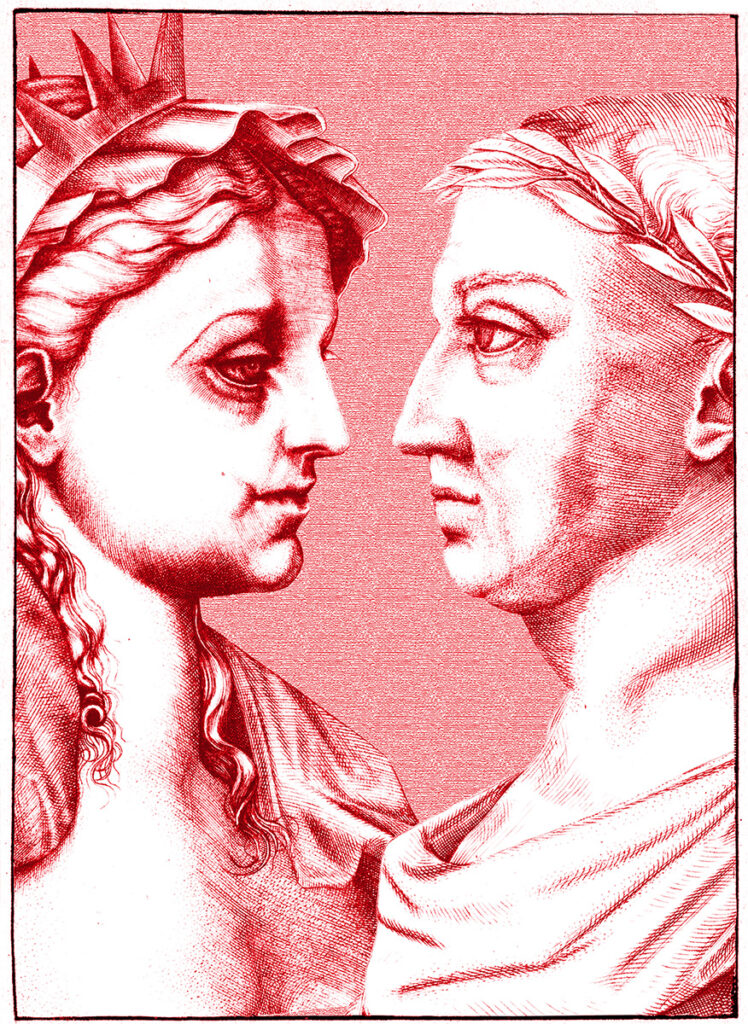
The Italian Renaissance humanist and poet Francesco Petrarch (1304–1374) left a profound mark on Western literature, music, and the language of love, immortalising his beloved Laura in the process. Aurore’s closing concert traces the journey of Petrarch’s poetry from the early Renaissance to the present day, exploring the tension between enchantment, desire and restraint, and the extraordinary artistic inspiration born of unattainable love.
The program offers a remarkably profound and wide-ranging selection of music and moods spanning centuries and stylistic periods. Petrarch’s words continue to echo and resonate in the souls of his contemporaries and people today alike. His poetry has inspired not only Palestrina, Casulana and other Renaissance composers, but also, among others, Franz Liszt (1811–1886) and Kaija Saariaho (1952–2023).
Artists
- Tuuli Lindeberg, soprano
- Ensemble Nylandia Renaissance Ensemble
- Directed by Matias Häkkinen
- Artistic planning Sini Vahervuo
Composers
- Nicola Vicentino
- Erik Bergman
- Maddalena Casulana
- Guillaume Dufay
- Franz Liszt
- Luca Marenzio
- Giovanni Pierluigi da Palestrina
- Rinaldo del Mel
- Kaija Saariaho
Please note the 6 pm time of the concert, which is an hour earlier than the other Aurore concerts!
5.15 pm – Meet the artist and free coffee at St. Pauls parish hall
6.00 pm – Concert begins at St. Pauls church
Tickets
Tickets from Aurore’s online ticket shop and from the door 1 hour before the concerts.
- single concert €25/20
- festival pass €65/55
You can also purchase tickets at Lippupiste, where the price will include an additional service fee.
Discounted tickets and festival passes are available to students, pensioners, unemployed, persons serving in the Finnish military or non-military civil service, and people ages 15-17. Personal assistants are admitted with the same ticket.
Children under the age of 15 are welcome at Aurore for free. If you are bringing a group of more than six children to a concert, please contact us in advance at info(at)aurore.fi.
Visitors with reduced mobility are advised to access the St. Pauls church via the inner courtyard, using either the main entrance or the side entrance. For more information about accessibility, please visit the Paavalinkirkko website.
Ticket inquiries: liput(at)aurore.fi
Please note that the Aurore program books are only available in Finnish and Swedish.
St. Paul’s Church

St. Paul’s Church (Paavalinkirkko), Sammatintie 5, Helsinki, is easily accessible by trams number 6 and 8 as well as a number of busses. See HSL Journey planner for connections.
Renessanssimusiikkia Paavalinkirkossa ry.
VAT ID FI25853317
Co. Mats Lillhannus
Pääskyvuorenkatu 41 • 20540 Turku • Finland
Festival Manager Sanni Antikainen:
info(at)aurore.fi